
Office Glass Frosting in Dubai: Privacy Film vs Frosted Glass Guide
Compare privacy film, sandblasted, etched, and frosted glass for Dubai offices, with guidance on coverage, manifestation, branding, cleaning, installation, and cost.
Quick answer
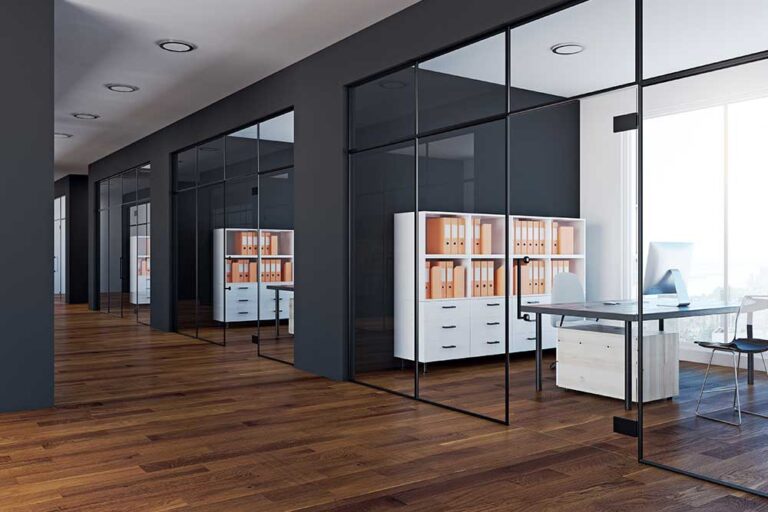
Office glass frosting in Dubai can be created with applied privacy film or specified as permanently frosted, sandblasted, etched, or patterned glass. Film is usually the practical choice when an existing partition needs a fast, reversible privacy upgrade. Factory-processed or fabricated decorative glass is better suited to new fit-outs and projects that need a durable premium finish. The right option depends on privacy level, glass type, branding, cleaning, tenancy, programme, and budget.
Glass World supports glass partition installation, custom glass fabrication, and privacy-focused glass products for offices across Dubai and the UAE. Before ordering, survey every elevation and agree exactly what should remain visible when people are seated, standing, or walking past the room.
Start with the room, not the frosting pattern
A meeting room, executive office, clinic room, HR space, reception screen, and open-plan collaboration area do not need the same privacy. Define who uses the room, what information is displayed, where desks and screens sit, how corridors approach the glass, and whether daylight or visual supervision must be retained. Full-height opacity can make a small office feel enclosed, while a narrow band may leave seated occupants exposed.
Mark viewing angles on the plan and check them on site. Furniture, raised floors, ceiling levels, door locations, and neighbouring workstations affect the useful coverage height. For rooms with confidential conversations, remember that visual frosting does not provide acoustic privacy; the partition, door seals, ceiling void, and surrounding construction must be reviewed as a complete system.
Privacy film: fast, flexible, and reversible
Applied frosted film can upgrade sound existing glass without dismantling the partition. It can cover a complete panel, form a central band, create graduated patterns, or incorporate cut logos and wayfinding. This makes it useful for occupied offices, leased premises, phased fit-outs, and brand refreshes where downtime needs to stay low.
Film quality and installation conditions matter. Glass should be compatible, intact, thoroughly cleaned, and free from failing coatings or contamination. Edges, joints, silicone, handles, manifestations, and door hardware need careful detailing. Dust trapped below the film, uneven trimming, bubbles, lifting corners, and mismatched panel orientation are particularly visible across a long corridor elevation.
- Best for retrofitting existing partitions and doors
- Can be removed or replaced when branding or tenancy changes
- Allows custom bands, gradients, logos, and geometric patterns
- Requires suitable cleaning methods to protect exposed edges and printed details
Frosted, sandblasted, and etched glass: permanent finishes
Permanent decorative glass is normally selected before fabrication. Frosted glass diffuses views and light, while sand-blasted glass and etched glass can create controlled translucent designs. These options avoid applied-film edges and can provide a refined finish for executive areas, reception spaces, hospitality offices, and long-term owner-occupied interiors.
The chosen finish should be sampled under the actual office lighting. Surface texture, opacity, colour cast, fingerprint visibility, cleaning behaviour, and the difference between the treated and untreated faces should be understood before approval. Holes, notches, door hardware, and safety processing must also be coordinated before toughening because finished toughened glass cannot be cut or drilled safely on site.
How much coverage gives useful privacy?
There is no universal frosting height. A seated privacy band might protect desk-level views while keeping borrowed light above. Full-height treatment can suit interview rooms or sensitive departments, but may reduce openness and make doors less obvious. A graduated design can balance both, provided the clear sections do not line up with screens or direct sightlines.
Build a simple elevation for each glass wall and door. Show finished floor level, panel joints, door swing, handles, furniture, clear zones, frosting limits, logo size, and pattern direction. On projects with repeated rooms, approve one physical mock-up before producing the full quantity. A mock-up exposes issues that a small digital visual cannot, including contrast, visibility at night, and alignment across frames.
Do not confuse privacy frosting with safety manifestation
Large transparent doors and partitions need to be visible to people moving through the office. Privacy treatment can contribute to visibility, but it should not automatically be assumed to meet the project's safety, accessibility, landlord, or authority requirements. The designer and contractor should confirm the required manifestation position, contrast, dimensions, continuity, and treatment of doors separately.
Keep essential markings clear when branding changes. Door leaves, sidelights, and fixed panels may need different layouts so users can identify the opening immediately. In busy corporate offices and commercial interiors, coordinate the graphic package with circulation routes, accessibility needs, emergency signage, and access-control devices before installation.
Check the existing glass before retrofitting film
Record whether each pane is monolithic, toughened, laminated, insulated, tinted, coated, wired, patterned, or already filmed. Applied products can interact differently with solar exposure, coatings, interlayers, and thermal stress. Exterior-facing or strongly sunlit glazing needs particular care; obtain product compatibility guidance rather than treating every clear-looking panel as identical.
Also inspect cracks, edge chips, scratches, loose channels, failed seals, rattling beads, door alignment, and unstable hardware. Privacy film should not conceal damaged or unsafe glass. Where a panel is defective or the new layout needs different holes and dimensions, planned glass replacement may be more reliable than decorating the existing pane.
Coordinate graphics, doors, and installation access
Provide vector artwork, brand colours, dimensions, reading direction, and panel numbering for custom graphics. Decide whether a logo should read correctly from the corridor, the room, or both. Patterns crossing several panels need allowances for mullions and joints; otherwise letters and shapes can appear broken after installation.
Plan work around office operations. Film installation needs clean access on the correct glass face, furniture clearance, controlled dust, adequate lighting, and time for inspection. New glass may require protected delivery routes, lifts, permits, dismantling, and temporary room closure. Survey door clearances and hardware so frosting does not interfere with locks, hinges, closers, sensors, seals, or access-control readers.
Cleaning and maintenance
Issue the approved cleaning method at handover. Applied film should be cleaned with compatible non-abrasive products and soft tools, without picking at edges. Textured permanent finishes can retain fingerprints or residue and may need a different routine from clear glass. Cleaning teams should know which face is treated and avoid blades, harsh chemicals, or abrasive pads unless the finish supplier specifically permits them.
Inspect film edges, joins, graphics, and manifestation during routine office maintenance. Local damage may be repairable, but a patch in the centre of a prominent panel can remain visible. Keep the film reference, artwork, colour specification, panel schedule, and approved sample so future replacements match the original installation as closely as possible.
Office glass frosting cost factors
Price depends on total area, number of panels, access, film or glass specification, full or partial coverage, custom cutting or printing, artwork preparation, night work, protection, removal of old film, glass replacement, door details, and the number of separate site visits. Permanent glass also reflects thickness, safety processing, edgework, holes, notches, transport, and installation.
For a useful quotation, share wide photographs and elevations, approximate glass dimensions, panel quantity, room use, desired privacy height, preferred finish, logo files, existing film condition, glass type if known, project location, access hours, and required completion date. State whether the office is occupied and whether landlord or fit-out approvals are already available.
Plan your Dubai office privacy upgrade with Glass World
Glass World can review existing office glazing, help compare applied and permanent privacy finishes, fabricate replacement panels where required, and coordinate partition or door work around the fit-out programme. The aim is a consistent result that protects privacy while retaining light, safe circulation, clean branding, and practical maintenance.
Send the layout, photographs, approximate sizes, room functions, privacy preference, artwork, and target date. A site survey can then confirm glass condition, coverage heights, panel quantities, edge details, access, and the most suitable route before production or installation begins.
Cabinet Glass Replacement in Dubai: Kitchen and Display Door Guide
Plan cabinet glass replacement in Dubai with guidance on accurate measurement, glass types, safety, edgework, hinges, decorative options, installation, and quote details.
Read article
Facade Glass Maintenance in Dubai: Inspection, Sealants, and Access Planning Guide
Plan facade glass maintenance in Dubai with guidance on inspections, sealants, gaskets, drainage, access, cleaning coordination, repairs, and maintenance budgets.
Read article
Laminated Glass Replacement in Dubai: Safety, Security, and Specification Guide
Plan laminated glass replacement in Dubai with guidance on safety interlayers, specification matching, cracked panes, frames, access, installation, and quotation details.
Read article